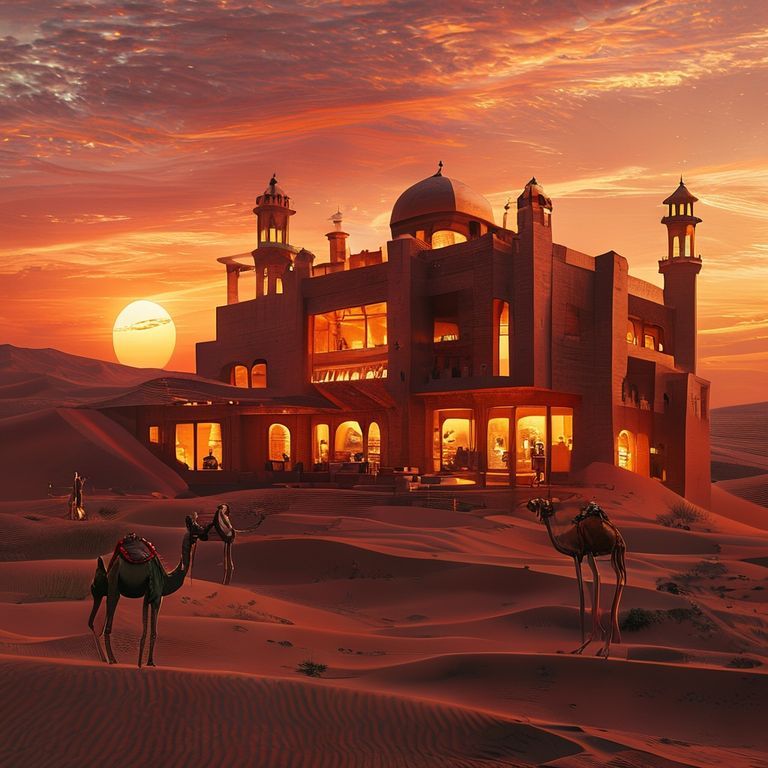
AGI House Bikaner
Desert City Innovation
Bikaner is emerging as India's solar energy capital with 6,000+ MW of projects, while Bikaner Technical University trains the next generation of engineers. The city blends Thar desert heritage with clean energy innovation.
About Bikaner
Bikaner's technical evolution began with its famous food processing industry - Bikaneri Bhujia became India's first nationally exported snack food, creating a tradition of industrial innovation. Bikaner Technical University, established in 2017 by reorganizing 69 engineering colleges, formalized technical education for northwestern Rajasthan. ICAR-NRCC, established in 1984 and upgraded in 1995, represents India's only dedicated camel research center. The 2020s brought solar energy transformation - the Thar desert's 300+ days of sunshine attracted billions in clean energy investment, positioning Bikaner as India's emerging solar capital.
Famous Landmarks
Junagarh Fort
Built 1588, one of India's few major forts on flat ground rather than a hill, contains 37 palaces and museums
Karni Mata Temple (Deshnoke)
Famous "Rat Temple" where rats are worshipped, 30 km from Bikaner
Lallgarh Palace
Built 1902-1926, Indo-Saracenic architecture, now heritage hotel
ICAR-NRCC Camel Museum
India's only camel museum, documenting camel heritage and research
Pugal Solar Park
One of world's largest solar parks (2,450 MW + 5,000 MWh storage) under construction
Cultural Highlights
AI Ecosystem in Bikaner
Bikaner is undergoing a remarkable transformation from desert trading post to clean energy powerhouse. With 6,000+ megawatts of solar projects either operational or under construction, the city is becoming India's solar capital—a distinction that's attracting billions in investment and creating an entirely new tech ecosystem in western Rajasthan. The Pugal Solar Park alone, at 2,450 MW with 5,000 MWh battery storage, will be among the world's largest when completed in 2028.
The numbers tell the story: SJVN completed a 241 MW trial run in March 2025 as part of a 1,000 MW project. NTPC invited bids for 1,500 MW in December 2024. IFC committed $105 million to Brookfield's 550 MW project. Tata Power finished a 450 MW installation. This concentration of solar investment is creating demand for engineers, technicians, project managers, and increasingly, tech startups focused on grid optimization, battery storage, and renewable energy software. BTU, with its 50,000+ students across 69 colleges, is pivoting curricula to serve this emerging industry.
Beyond solar, Bikaner maintains two unique strengths. First, the food processing legacy: Haldiram Bikanervala proved that global brands can emerge from desert cities, and the Bikaneri Bhujia industry pioneered food export infrastructure that newer food tech startups now leverage. Second, camel research: ICAR-NRCC's collaboration with IISc Bangalore on camel immunology and anti-snake venom development represents cutting-edge biotech research in an unexpected location. The center's 300+ camel herd and museum also drive eco-tourism innovation.
The ₹52.26 crore iStart Innovation School Hub will be transformative for Bikaner's startup ecosystem. Modeled on Jaipur's successful Rajiv Gandhi Fintech Institute, it will provide incubation, mentorship, and seed funding that currently requires traveling to the state capital. Combined with BTU's ₹2.5 lakh student startup grants and the ₹1,000 crore Atal Innovation Studio initiative, Bikaner is building infrastructure to retain local talent rather than losing them to Jaipur and Delhi. At 31% lower costs than Delhi and with growing energy industry opportunities, the desert city offers a unique value proposition: affordable living, emerging tech sector, and a heritage that includes building global brands from scratch. For founders in solar tech, food processing, or desert agriculture, Bikaner may be the most underrated opportunity in Rajasthan.
Education & Research Hub
🎓 Universities & Institutes
Bikaner Technical University (BTU)
State~50,000 students
Visit website →Government Engineering College Bikaner
State~2,500 students
Visit website →Maharaja Ganga Singh University
State~80,000 students
Visit website →🔬 Research Labs
ICAR-National Research Centre on Camel (NRCC)
Indian Council of Agricultural Research
“MoU with IISc Bangalore for camel immunology and anti-snake venom development. Maintains 300+ camels of 4 breeds (Bikaneri, Jaisalmeri, Kachchhi, Mewari). Camel museum and eco-tourism center.”
Solar Energy Research Center - BTU
Bikaner Technical University
“Research supporting 6,000+ MW solar installations in Bikaner district, including Pugal Solar Park optimization”
Central Arid Zone Research Institute (CAZRI) Extension
ICAR
“Research on desert crops, sustainable agriculture for Thar region”
Startup Ecosystem
Bikaner is positioned as western Rajasthan's innovation hub with ₹52.26 crore allocated for the iStart Innovation School Hub - modeled on Jaipur's Rajiv Gandhi Fintech Institute. The city benefits from ₹1,000 crore state investment in Atal Innovation Studios and ₹300 crore for upgrading BTU to Rajasthan Institute of Technology status. The massive solar energy investments (6,000+ MW) are creating a cleantech ecosystem, while traditional industries like Bikaneri Bhujia drive food processing innovation. BTU provides startup incubation with ₹2.5 lakh grants for student ventures.
🚀 Incubators & Accelerators
iStart Innovation School Hub Bikaner
Comprehensive startup incubation for western Rajasthan (₹52.26 crore investment)
BTU Startup Incubation Centre
Student entrepreneurship with ₹2.5 lakh seed grants
Atal Innovation Studio Bikaner
Coding, robotics, and VFX training for youth (part of ₹1,000 crore state initiative)
💰 Funding Landscape
Startups access funding through iStart Rajasthan grants (up to ₹25 lakhs), BTU seed grants (₹2.5 lakhs), and solar industry partnerships. The Rajasthan Investment Promotion Scheme (RIPS) offers 50% capital subsidy. Solar projects have attracted $105M+ from IFC/Brookfield alone.
Success Stories
Notable AI Companies
ICAR-National Research Centre on Camel
Premier camel research with IISc Bangalore collaboration
Visit website →Notable Tech People
Dr. Artabandhu Sahoo
Director at ICAR-National Research Centre on Camel
Leading camel immunology research and IISc Bangalore collaboration
Shyam Bihari Agarwal
Founder at Haldiram Bikanervala
Built global food processing brand from Bikaner, pioneer of Bikaneri Bhujia exports
Dr. S.K. Verma
Vice Chancellor at Bikaner Technical University
Expanding BTU to become Rajasthan Institute of Technology
Solar Energy Industry Leaders
Project Directors at SJVN, NTPC, Tata Power, Brookfield
Managing 6,000+ MW solar investments making Bikaner India's solar capital
Living & Working in Bikaner
Bikaner offers India's most affordable urban living - 31% cheaper than Delhi. The desert city combines 16th-century Junagarh Fort heritage with emerging clean energy opportunities. Excellent for remote workers seeking ultra-low costs and growing tech infrastructure.
💰 Cost of Living
31% cheaper than Delhi, among top 1% cheapest cities globally
🏘️ Tech Neighborhoods
BTU Campus Area
University zone with student housing and startup activity
Best for: Students, academic founders, and university collaborators
Station Road / City Center
Commercial district with business establishments
Best for: Traditional businesses and commerce
Pugal Tehsil (Solar Zone)
Massive solar park area with energy industry infrastructure
Best for: Clean energy professionals and solar tech startups
Jorbeer (NRCC Area)
Research zone 8 km from city with camel research center
Best for: Researchers, biotech professionals, eco-tourism ventures
✨ Quality of Life
Bikaner offers an authentic Rajasthani desert experience with extreme affordability. The Junagarh Fort and Karni Mata Temple attract tourists, while the emerging solar industry brings professional opportunities. Winter months (Oct-Feb) are pleasant; summers can exceed 45°C. The city's camel heritage, including NRCC's museum and camel milk products, offers unique lifestyle elements not found elsewhere.
Getting Here & Around
Airport
Nal Airport (domestic, limited flights); Jaipur International Airport (330 km)
Train Connections
Bikaner Junction - major rail hub with Delhi, Jaipur, Mumbai connections
Local Transport
Auto-rickshaws, city buses, app-based cabs; no metro
Nearby Tech Hubs
Jaipur (330 km), Delhi (450 km), Jodhpur (250 km)
Where We Meet
Bikaner Technical University Campus
BTU Campus, Bikaner
universityGovernment Engineering College Bikaner
Bikaner
universityICAR-NRCC Campus
Jorbeer, 8 km from Bikaner
researchBikaner Chamber of Commerce
Station Road, Bikaner
conferenceHotel Laxmi Niwas Palace
Lallgarh Campus, Bikaner
event spaceReady to join the Bikaner AI community?
Connect with hundreds of AI enthusiasts, attend local events, and be part of India's growing AI ecosystem.
By joining, you agree to our community guidelines.